
The Los Angeles Trust for Children's Health fosters cross-sector collaboration between schools and health providers by matching academic and medical data based on effective and reliable address verification

At a glance
The client: The Los Angeles Trust for Children's Health
The L.A.Trust is a nonprofit that bridges health and education to improve the future of underserved children and families in high-need areas throughout the city.
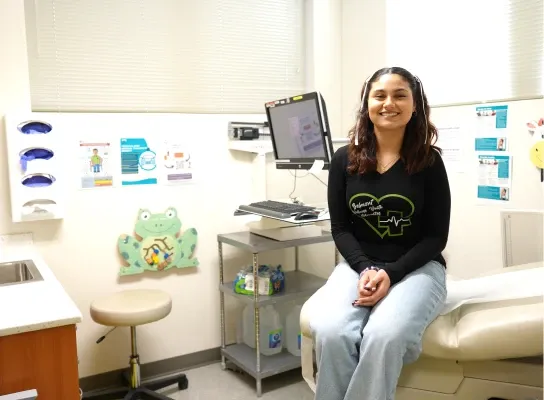
The L.A. Trust works with school districts and school-based health centers to bring physical, mental, and dental health services directly to students in need.
They foster collaboration among schools, health providers, insurers, policymakers, and researchers to identify and respond to children’s health issues that stand in the way of education and a better life.
Due to strict privacy regulation for health and school data, these partners rarely shared data in the past and did not have insight into their collective impact. In response to this, The L.A. Trust built the Data xChange, which has a patent-pending app that de-identifies, matches, and minimizes the risk of sharing data to make cross-sector collaboration easier than ever.
Currently, the Data xChange matches and anonymizes data for over 1 million students. By using the Data xChange, organizations can better understand the care children receive and how it affects their likelihood of succeeding in school.
For instance, one study that was made possible by The L.A. Trust Data xChange focused on how health impacted attendance. Attendance is a critical measure that schools and health providers look at because it’s an early indicator of whether a student will graduate, and students who graduate high school have lower incarceration rates and better health outcomes later in life. This study, published in the Journal of Adolescent Health, showed that after just one visit to a school-based health center for mental health, the trajectory of declining attendance was sharply reversed.
Currently, The L.A. Trust Data xChange has four research projects underway. One of them incorporates over 11 million insurance records and analyzes whether visits to a school-based health center actually reduce emergency room claims. Without easy access to doctors, children with serious, chronic health conditions such as asthma are less likely to properly address their symptoms, leading to more trips to the emergency room, in turn increasing insurance claims and decreasing attendance in school.
By tying medical and academic records, The L.A. Trust provides the data needed to address students’ health challenges that impact attendance, graduation rates, and a healthy future.
The challenge: Accurately matching academic and health records
The Los Angeles Trust for Children’s Health knew from day one that address verification would play a critical role in their patent-pending app that deidentifies and matches data across disparate systems.
When The L.A. Trust collected health, academic, or insurance records, the data often included multiple historical addresses for each person, unstandardized addresses, or datasets from different sources that used different address standardization rules, making it difficult to create a reliable match between disparate systems. And more often than not, these addresses were manually entered, making them prone to errors like typos, missing secondary information, and cities with mismatched ZIP Codes, which further complicated matching.
Patricia Anton—an advisor to The L.A. Trust on the Data xChange and a former board member—put it plainly, “Bad address data would drastically impair our ability to make an effective match, making any insights into how student health affects academic performance unreliable.” Without effective, real-time address standardization that’s executed through their custom data integration app, The L.A. Trust would have a much more difficult time building trust and credibility with partners who were cautious and reluctant to share data in the first place.
The solution: Matching protocols powered by verified, standardized addresses
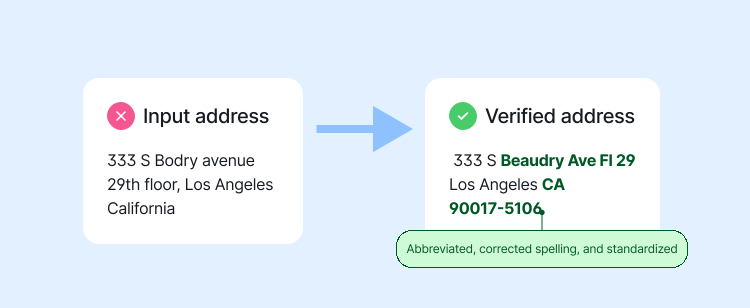
Address verification is the process of checking a mailing address against an authoritative address database, while standardization is the process of normalizing and converting that address into the local postal authority's standard format.
With both address verification and address standardization in place, The L.A. Trust hoped to ensure the accuracy of addresses so they could de-identify and merge records from disparate sources according to an algorithm of matching rules.
By improving their matching accuracy, The L.A. Trust would also build trust with their partners. Patricia described the big-picture impact she expected from clean address data:
The results: Credibility, reliability, and confidence
To boost the reliability of their matches, the company implemented US Address Verification.
“Smarty was so easy to implement, we were up and running in less than a day,” Patricia recounted. “Every time we asked a question, we got a great answer.”
Since implementation, The L.A. Trust has seen:
- Higher match rates: US Address Verification increased match rates by 15%. For a nonprofit verifying 18 million records a year, that’s 2.7 million additional matches annually!
- Transparent pricing: Straightforward, upfront pricing made costs per API lookup easy to predict and manage.
- Stronger privacy protections: Since protecting personally identifiable information (PII) is a top priority, The L.A. Trust uses Smarty’s Enhanced Data Privacy feature, which processes addresses solely in transient memory and doesn’t store or retain any address data after an API request is complete.
- Next-level support: With the help of Smarty’s Technical Support’s expertise, The L.A. Trust quickly adapted their app to integrate the address verification API.
As a result, The L.A. Trust consistently provides their partners with even more accurate insights into the impact that health issues have on a child's ability to succeed in school and in life.
US Address Verification increases The L.A. Trust’s confidence in their data. When an address is used by their matching protocols, they can rely on the accuracy of the matched academic and health records.
“Our partners want to know we’re doing things right,” Patricia explained. “Being able to say that we do address standardization through a reputable vendor gives us both credibility and reliability. That’s what attracts new partners.”
Now, The L.A. Trust can help their partners fulfill their mission: bridging health and education to achieve student wellness.
Looking forward
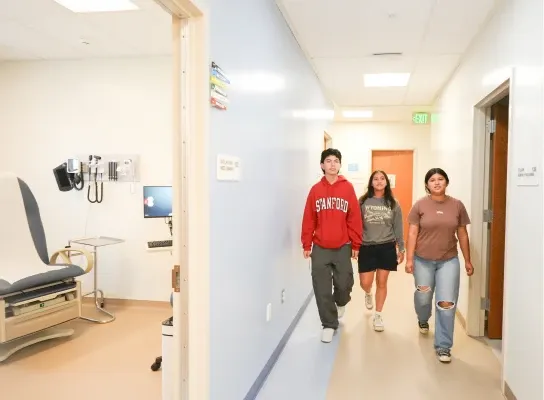
The L.A. Trust plans to expand their data and connect with more partners looking to better understand the link between children’s health and education. With reliable address verification supporting that growth, The L.A. Trust aims to continue accurately matching records to provide their partners with reliable, trusted insights.
Ready to see what address data solutions could do for your business? Connect with an address expert to learn more!
Ready to get started?
More success stories


