
Healthcare address validation & verification explained


Healthcare address validation ensures that patient address data is accurate, standardized, and deliverable before it creates downstream problems with patient data verification, billing, claims, and care communication. In healthcare, a bad address can delay billing, misroute a prescription, complicate a claim, duplicate a patient record, compromise medical data accuracy, or send sensitive information to the wrong location.
Healthcare address verification helps prevent those issues by checking addresses against authoritative datasets, correcting errors when possible, standardizing formatting, and confirming whether an address is usable for real healthcare workflows.
That matters because patient addresses touch almost every part of the healthcare experience: intake, EHR records, insurance claims, billing statements, prescriptions, medical devices, lab communications, telehealth onboarding, and at-home care, making address accuracy essential to EHR data quality and healthcare data integrity.
Healthcare professionals shouldn’t have to manually verify and standardize addresses. With the right healthcare address validation tools, teams can automate address verification, improve address standardization, support Project US@ alignment, flag duplicate or incomplete address data, and reduce the cost of bad patient information.
Smarty specializes in fast, accurate, HIPAA-supportive healthcare address verification (including Project US@ standardization) for organizations that need patient address data they can trust.
Check out our free demos for healthcare address verification now, or keep reading to learn more about healthcare address validation and how it can save you time and money to the tune of millions of dollars.
Here’s what you can expect to learn about healthcare address validation and verification in this article:
- What is healthcare address validation?
- Why address accuracy matters in healthcare
- Healthcare address validation and the revenue cycle
- Healthcare address validation vs. verification
- Key use cases in healthcare
- Benefits of healthcare address verification
- How to implement address validation in healthcare systems
- Choose healthcare address validation built for accuracy, speed, and compliance
- Why choose Smarty for healthcare address verification?
- Healthcare address validation FAQ
What is healthcare address validation?
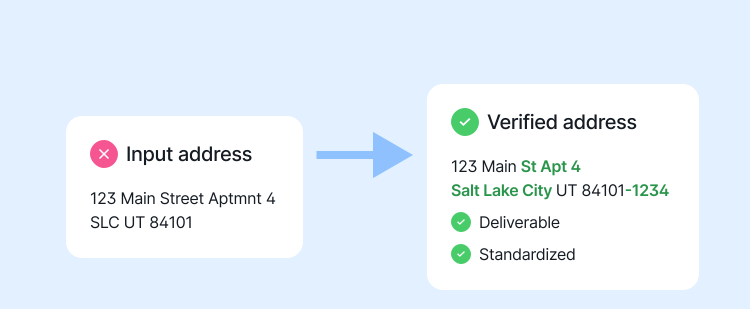
Healthcare address validation is the process of verifying an address used in a healthcare workflow against authoritative address data to determine whether it’s valid, complete, standardized, and deliverable. In practice, patient address validation helps healthcare organizations improve data quality before bad information spreads across connected systems.
Healthcare address verification confirms the address, corrects errors where possible, and returns a standardized version that can be used across systems like patient portals, EHRs, billing platforms, claims tools, and outreach databases.
For example, if a patient enters...
225 colubus 7505
Road hicago 60601
…a strong healthcare address verification tool may standardize addresses, correct abbreviations, add missing postal details, and determine whether the address is deliverable. The best and most robust tools also explain what changed, rather than simply returning a “valid” or “invalid” result.
The verified address would look like this with a strong healthcare address validation tool:
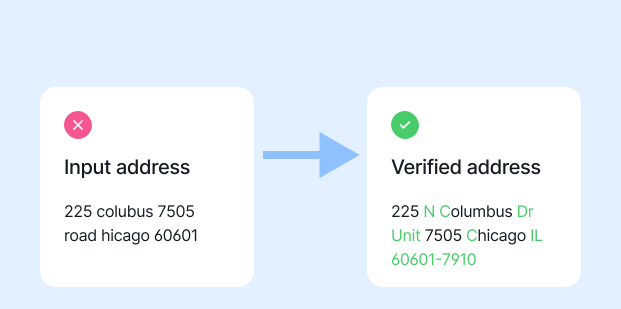
That transparency matters more than padding match rate numbers with potential false positives. Healthcare organizations need more than a cleaner-looking address. They need to know whether mail, medication, devices, bills, care instructions, or at-home providers can actually reach the patient.
Why address accuracy matters in healthcare
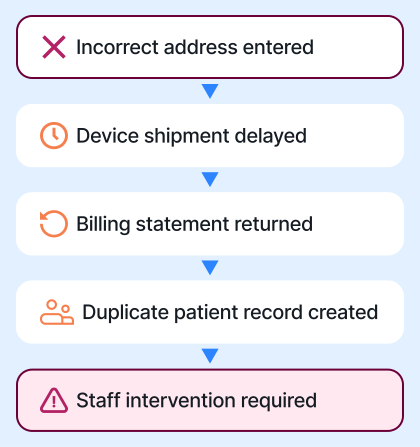
Address accuracy is an administrative detail, but in healthcare, it also significantly affects patient safety, revenue cycle performance, compliance-related workflows, and patient communication.
A single bad address can create a chain reaction. A missing apartment number can delay a medical device. An outdated mailing address can cause returned statements. A typo can contribute to duplicate patient records. An inconsistent address format can make patient matching across systems more difficult.
That’s why address validation for healthcare systems should occur before patient address data is entered into EHRs, billing systems, claims workflows, patient communication tools, and analytics platforms.
In other words, address standardization is less about cleaner mail and more about medical data accuracy and more reliable patient data verification across all touchpoints.
| Area affected | How bad address data contributes |
| Patient safety | A patient is discharged with a remote monitoring device, a prescription, a test kit, or a shipment of medical equipment. If the address is missing a unit number or contains a typo, the item may be delayed or delivered to the wrong place. |
| Billing delays | A statement is mailed to an outdated or undeliverable address. The balance ages, staff have to resend the bill, and collections may be delayed. |
| Claims rework | Inaccurate demographic information can contribute to claim errors, eligibility issues, or payer follow-up. |
| Compliance-related workflows | Sensitive patient communications sent to the wrong address may require investigation, documentation, remediation, or a breach risk assessment. The Health and Human Services states that the HIPAA Breach Notification Rule applies to breaches of unsecured protected health information. |
| Patient communication | Appointment reminders, referral instructions, pre-visit paperwork, insurance notices, or lab communications may not reach the patient on time, making mail deliverability healthcare teams work harder and longer hours. |
| Operational efficiency | Staff spend time researching addresses, contacting patients, correcting records, resending mail, and reconciling duplicate data. |
Healthcare address validation and the revenue cycle

Healthcare address validation is directly linked to revenue cycle performance because address data often enters the workflow at registration and follows the patient record through eligibility checks, claims submission, billing, collections, and payer communication.
That means bad data at the front end can create work throughout the rest of the process.
Claims research shows the same pattern. Research shows that missing or inaccurate data remains one of the top reasons for claim denials, and incomplete or inaccurate patient registration data is also a major denial driver.
Healthcare address verification won’t solve every denial, but it can improve the quality of patient demographic data before it reaches the claim. That makes patient address validation a practical front-end control for cleaner revenue cycle workflows.
Cleaner address data supports cleaner claims. Cleaner claims support faster reimbursement.
Healthcare address validation vs. verification
“Healthcare address validation” and “healthcare address verification” are often used interchangeably, but they may refer to slightly different steps in the same process.
Address validation determines whether an address exists and whether it matches an authoritative address dataset.
Address verification confirms that the address is accurate, complete, standardized, and deliverable for the intended use.
In practice, a strong healthcare address solution should do both: validate that the address is real and verify that it’s complete, standardized, and usable.
| Term | What it means | Healthcare example |
| Address validation | Checks whether an address exists in an authoritative dataset | Confirming that a patient’s street address is a real address |
| Address verification | Confirms that an address is accurate, complete, standardized, and deliverable | Correcting a patient’s address, adding missing ZIP+4 data, and confirming that mail can be delivered |
| Address standardization | Formats an address according to recognized postal or data standards | Changing “123 Main Street Apt 2” to “123 Main St Apt 2” |
| Deliverability | Determines whether mail or shipments can reach the address | Flagging an address as undeliverable before sending a billing statement |
For most healthcare organizations, the distinction is less important than the outcome. The right healthcare address validation solution should verify that the address exists, ensure it’s complete, standardize the format, and help determine whether it’s deliverable.
Key use cases in healthcare

Healthcare address validation can be used anywhere patient, provider, payer, or facility address data enters or moves through a system. The most valuable use cases usually happen at the front end, where bad data can be stopped before it spreads.
Patient intake forms
Patient intake is one of the best places to use healthcare address verification because it prevents bad address data from entering the system in the first place.
Real-time address autocomplete and validation can correct typos, standardize formatting, suggest valid addresses, and prompt patients or staff to add missing apartment, suite, or unit information.
That improves the patient experience and reduces manual cleanup later.
EHR systems
Electronic health record systems rely on accurate demographic data. If address information is inconsistent or duplicated, it can damage EHR data quality, contribute to duplicate records, fragment patient histories, and weaken communication.
Healthcare address validation and autocomplete help standardize addresses before they’re stored, making records easier to match, search, maintain, and share across systems while supporting healthcare data integrity.
Insurance claims
Claims workflows depend on accurate patient and subscriber information. Address validation can help ensure that claims data is complete and formatted consistently before submission.
This can reduce manual corrections, support cleaner claims, and help revenue cycle teams avoid preventable delays caused by poor demographic data.
Telehealth onboarding
Telehealth still requires accurate location data. Providers may need a patient’s physical address for licensure requirements, emergency support, insurance purposes, prescription delivery, remote monitoring devices, or follow-up care.
Validating addresses during telehealth onboarding helps ensure that virtual care is supported by reliable patient location data.
Patient outreach and population health
Patient outreach campaigns depend on clean contact data. If addresses are outdated, duplicated, or undeliverable, reminders, screening notices, care gap communications, and public health mailings may never reach the intended patient.
Batch healthcare address verification can clean existing lists before outreach begins, reducing waste and improving the chance that communications reach the right households.
Pharmacy, labs, and medical device delivery
Healthcare address verification is especially important when physical items are shipped or routed to a patient’s home. Prescriptions, lab kits, remote monitoring devices, durable medical equipment, and post-discharge materials all rely on deliverable address data.
If an address is wrong, care can be delayed, and staff may have to intervene manually.
Benefits of healthcare address verification
Healthcare address verification improves medical data accuracy and the quality, consistency, and usability of address data across the organization. The result is better communication, fewer errors, lower costs, and smoother operations.
Healthcare address verification helps teams trust the patient address data as it moves through intake, EHRs, billing, claims, outreach, and care delivery, making it a core part of patient data verification.
| Benefit | Why it matters |
| Cleaner patient records | Standardizes address formats, helps identify duplicate records, and improves patient matching across systems. |
| Fewer returned statements | Confirms deliverability before billing statements, notices, or other patient communications are mailed. |
| Better patient communication | Helps with explanation of benefits, appointment reminders, care instructions, lab notices, and insurance documents reach the right place. |
| Less claims rework | Improves patient demographic accuracy before address data reaches eligibility checks, claims, and payer workflows. |
| Reduced compliance risk | Helps prevent sensitive patient communications from being sent to the wrong address, avoiding HIPAA fines. |
| Lower staff burden | Automates corrections that would otherwise require manual research, patient follow-up, and record updates. |
In short, healthcare address validation helps prevent bad address data from becoming delayed care, returned mail, billing friction, or unnecessary administrative work.
For easy wins, before you modernize anything else, fix the address data that everything else relies on.
How to implement address validation in healthcare systems
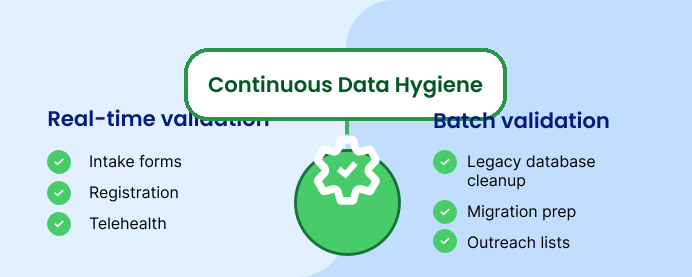
Address validation for healthcare systems can be implemented in several ways, depending on your systems, workflows, and data quality needs. Most organizations need a combination of real-time validation, batch verification, and ongoing data hygiene.
API integration
An address validation API allows healthcare organizations to verify addresses directly inside existing applications. This can include patient portals, registration platforms, EHR systems, billing software, CRM tools, and telehealth workflows.
With an API, addresses can be validated as they are entered, helping prevent errors before they spread across connected systems.
Real-time vs. batch validation
Real-time validation and batch validation solve different problems.
Real-time validation checks addresses at the point of entry. This is ideal for patient intake, appointment scheduling, telehealth registration, and online forms.
Batch validation checks large lists of existing addresses. This is ideal for cleaning legacy databases, blending third-party data, preparing mail campaigns, reducing returned mail, or improving records before a system migration.
Most healthcare organizations benefit from using both.
Data hygiene workflows
Address validation should be part of a larger data hygiene strategy. That means validating new records, regularly cleaning existing records, identifying duplicates, and monitoring address quality over time.
A strong workflow may include:
- Validating addresses at intake.
- Standardizing addresses before storing them.
- Flagging missing apartment or suite numbers.
- Running batch checks on existing patient records.
- Reviewing undeliverable or ambiguous addresses.
- Updating connected systems with clean address data.
- Monitor address quality over time.
Healthcare address verification is most valuable when it isn’t treated as a one-time cleanup project. It should be a continuous control that protects patient data quality across the organization.
But this doesn’t have to be a manual or time-consuming project. With an easy API setup, most workflows can be automated, running smoothly and quietly in the background.
Choose healthcare address validation built for accuracy, speed, and compliance
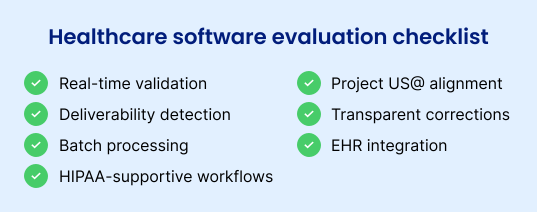
Not all address validation tools are built for healthcare, and not every tool is designed to support HIPAA address compliance needs. The right solution should do more than “fix” an address. It should verify that patient address data is accurate, standardized, and deliverable, then show you exactly what changed.
Look for healthcare address verification and patient address validation tools that offer:
- Authoritative address data
- Real-time API validation
- Batch address verification
- Address standardization
- Deliverability indicators
- Missing secondary address detection
- Transparent correction details
- Strong documentation
- Easy integration with healthcare systems
- HIPAA-supportive processes and vendor practices, including privacy compliance
- Fast response times for patient-facing workflows
- Support for Project US@-aligned address standardization goals
Accuracy matters most. A corrected address is only useful if you can trust the correction. Healthcare organizations should avoid tools that inflate match rates with risky assumptions or false positives.
Speed matters, too. Healthcare address validation should happen quickly enough to support real-time intake, registration, telehealth, appointment scheduling, and patient-facing forms without creating friction.
Integration also matters. The right healthcare address verification solution should work with your current systems, including EHRs, billing platforms, patient portals, CRMs, claims tools, and internal data infrastructure.
Why choose Smarty for healthcare address verification?
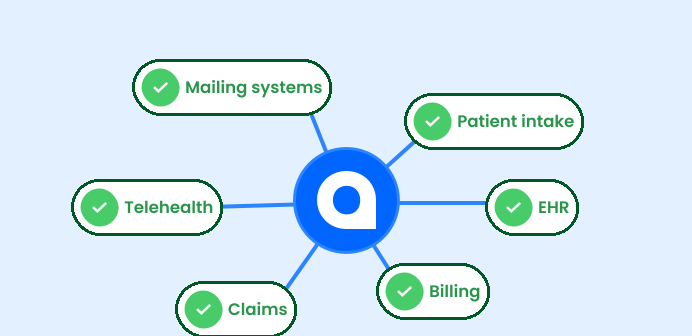
There are many factors to consider when evaluating a healthcare data provider. Smarty helps healthcare organizations quickly and confidently validate, standardize, and verify address data to improve medical data accuracy across systems.
With Smarty, organizations can use healthcare address verification to:
- Validate patient addresses in real time
- Standardize addresses for cleaner records
- Confirm deliverability before sending mail or shipments
- Support Project US@ address standardization requirements
- Clean existing address databases in batch
- Reduce returned mail and failed deliveries
- Improve patient communication
- Support cleaner billing and claims workflows
- Reduce manual address cleanup
- Integrate address validation for healthcare systems into existing systems
Healthcare address validation involves much more than just fixing typos. It's about protecting the quality of the data that underpins patient care, billing, compliance-related workflows, and communication.
Smarty gives healthcare organizations the tools to get address data right the first time and keep it clean over time.
Start validating healthcare addresses with Smarty today.
Healthcare address validation FAQ
What’s the difference between healthcare address validation and healthcare address verification?
Healthcare address validation checks whether an address exists in an authoritative dataset. Healthcare address verification confirms that the address is accurate, standardized, complete, and deliverable. Both processes help improve patient data quality and reduce communication, billing, and delivery errors.
Why is address accuracy important in healthcare?
Address accuracy is important because healthcare organizations use patient addresses for billing, prescriptions, medical device delivery, appointment communication, insurance documents, and at-home care. Incorrect addresses can cause missed communication, delayed care, returned mail, and administrative costs.
Can address validation help reduce claim denials?
Yes. Address validation can help reduce claim issues by improving the accuracy and consistency of patient demographic data. While not every denial is related to address errors, clean address data can reduce rework, support cleaner claims, and help prevent avoidable administrative delays.
Is address validation HIPAA compliant?
Address validation can be HIPAA-compliant when performed with a solution that meets HIPAA requirements and properly protects patient information. Healthcare organizations should choose an address validation provider that understands healthcare workflows, offers advanced data privacy options, and can support secure handling of protected health information.
How do healthcare systems implement address verification?
Healthcare systems typically implement address verification through API integration in real time. APIs can validate addresses during intake or registration, in batches or individually, to clean existing patient databases.
Does address validation work in real time?
Yes. Real-time address validation checks and standardizes addresses as they’re entered into a form or system. Often this is referred to as address autocomplete or address autofill. This validation at intake helps prevent bad data from entering your systems, improves patient record accuracy, and reduces the need for manual cleanup later.
Was this helpful?