


Before we can talk about and define alias locations, it’s important to clarify definitions. These terms are specific to this article because “address,” “location,” and “alias” can contextually mean very different things.
Address: The written description of a physical location or delivery point.
Alias Locations: Two or more active addresses that describe the same physical location or delivery point.
In Smarty’s technical terms:
Alias locations are two or more active addresses sharing a single SmartyKey. It‘s an address that has many historically valid versions that refer to the same location.
The word active matters. Through mechanisms like LACSLink, addresses sometimes shift from one form to another—such as converting a rural route address to a standardized street address.
In those cases, the old address is typically deactivated and replaced with a new, active one. Since both addresses aren’t valid at the same time, we don’t consider those to be aliases.
(PSST! Smarty still retains that outdated data.
Those outdated addresses will still show as historical location data through the SmartyKey EXT.)
Why alias locations exist
Alias locations aren’t errors or duplicates.
They’re real, valid, deliverable addresses describing the same place. Smarty also identifies common (and some fringe) alias location types that can occur in the real world.
Type 1: Cross-street aliases
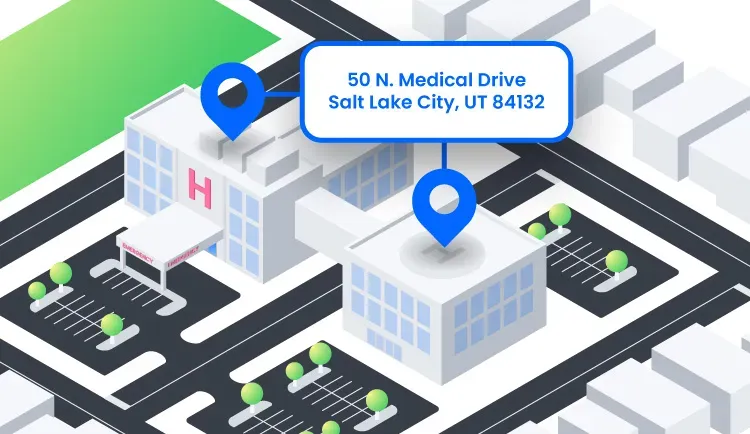
A cross-street alias occurs when a building is situated at an intersection with entrances on both streets. This is common in hospitals built with a skybridge/skywalk connecting one ward to another ward on the other side of a street, or a college campus expansion built in a similar manner.
Because each entrance is legitimate, the building can be referenced by two or more different first lines (for example, 101 Main St and 500 Oak Ave), while any secondary information, like suite or unit numbers, stays the same.
Example:
101 Main St, Suite 200
500 Oak Ave, Suite 200
Both describe the same building, just from different sides of the block.
Type 2: Neighbor aliases
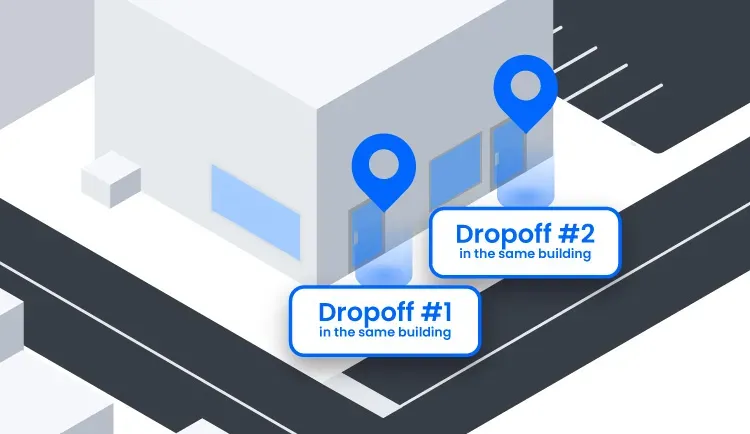
A neighbor alias occurs when a building spans multiple adjacent plots or has two primary entrances on the same street. (Think strip malls that buy out the suite next door for expansion). These locations’ addresses typically differ only slightly in their primary numbers.
Example:
120 Main St
122 Main St
You might see this in large retail complexes, residential developments, or corporate campuses that share space or infrastructure but maintain distinct numbering and don’t cross the street.
Type 3: Street-name aliases
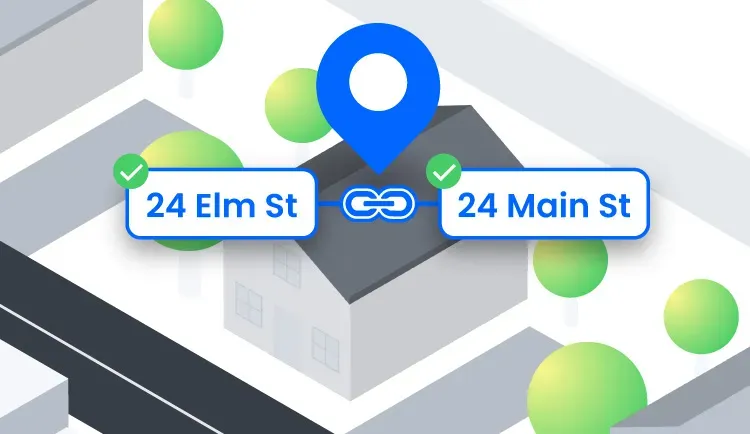
Some streets have two valid names that coexist, often because of historical changes or local naming conventions. When that happens, every address on that street has an alias that uses the alternate name.
Example:
500 Elm St
500 Martin Luther King Jr Blvd
Both are valid and deliverable—two names, one physical location. This often happens when the town renames a street to honor a local hero, highlight the town’s college, etc.
How Smarty handles alias locations
Smarty connects alias addresses through a SmartyKey®, a persistent, unique identifier assigned to every location record in Smarty’s database. Then, the SmartyKey EXT is assigned to each address, keeping track of the historical addresses associated with a location.
All valid aliases for the same physical location share the same SmartyKey.
That means your applications, CRMs, and analytics systems can treat them as one unified record instead of separate entries.
When a new alias is added, it’s automatically linked to the existing SmartyKey EXT, preserving data integrity and making it easier to deduplicate records, verify addresses, and maintain long-term accuracy.
This system enables Smarty’s address verification and enrichment tools to go beyond surface-level validation—they understand the relationships between addresses over time.
Why alias location awareness matters
Without alias awareness, your data can become fragmented, creating the illusion of multiple locations where there’s only one. That leads to:
- Duplicate mailings and wasted marketing spend
- Confusing or inaccurate analytics
- Failed deliveries or address mismatches
- Data hygiene issues across internal systems
By identifying and linking aliases, Smarty helps you see the real-world structure behind your address data—so whether your customer says “500 Elm St” or “500 Martin Luther King Jr Blvd,” your system knows it’s the same place.
Alias locations are a natural part of the ever-changing address landscape. Smarty’s unique use of the SmartyKey makes that possible—bridging every valid alias to one consistent, reliable record of truth.
Feel free to try out any of our address tools for free, paying special attention to the SmartyKey feature that helps you track and manage your alias locations. Or sign up for a 42-day free trial to explore even more capabilities with your address data.
Was this helpful?