



USPS’s “new construction, address not recognized” means that the property is too new to appear in the United States Postal Service’s official database, or the USPS hasn’t yet confirmed that the address is eligible for mail delivery.
As a homeowner, it’s incredibly frustrating when the United States Postal Service (USPS) doesn’t recognize your street address. It’s a somewhat solvable problem, though. Ever heard the phrase, “The squeaky wheel gets the grease?” Well…
Here are 6 (ish) helpful ways homeowners can attempt to add a new construction address to USPS’s database. We’ll get into the nitty-gritty below, but for now, here they are in drive-by form:
- Contact your local post office
- Contact your tax assessor’s office
- Contact your county emergency services non-emergency line
- Fill out a general request on the USPS tech support page
- Contact your builder
We’d tell you the 6th option to resolve a “new construction, address not recognized” issue is to just wait, but we also know that’s not the answer you want. You’re likely here because you’ve already done that.
How to register a new business location with USPS
Registering a newly constructed commercial address follows a process similar to that for registering a residential address. If USPS doesn't recognize your business address, consider the following steps:
- Contact your local post office. Reach out to the USPS location serving your business to inquire about adding your new address to its records.
- Check with your local tax assessor's office. Confirm that the property address has been officially assigned and accurately recorded.
- Contact your county's emergency services department. Use the non-emergency line to verify that your address appears correctly in local addressing and emergency response records.
- Submit a request through USPS support. Report the unrecognized address through the appropriate USPS support channel and request assistance.
- Follow up with your builder or developer. Confirm that the necessary address information has been submitted to the appropriate local authorities.
When a USPS new construction address isn't recognized, verification delays can last weeks or even months, potentially resulting in rejected orders, shipping issues, and frustrated customers.
Smarty's address verification tools help businesses identify address discrepancies, standardize data, and better manage addresses that USPS can't yet verify.
Explore the tools and resources below, then keep reading to learn why USPS doesn't recognize some new construction addresses and how to resolve common address registration issues.
In the rest of this article, we’ll provide information on how to register your address with the US Postal Service, even though they don’t provide us with “USPS new construction address” applications.
Table of contents
- How to register a new business location with USPS
- How homeowners can fix USPS "new construction address not recognized"
- How to get an address for land
- The time it takes for a new address to be recognized
- How organizations should handle USPS "new construction address not recognized."
- USPS new construction address not recognized? Here's what to remember
- FAQ about USPS new construction, address not recognized
- Why is my new construction address not recognized by USPS?
- How do I check if my new address is registered with USPS?
- Can I receive mail at a new construction address that USPS doesn't recognize?
- Why does my new construction address show up on Google Maps but not USPS?
- Can an address verification API validate an address that USPS doesn't recognize?
How homeowners can fix USPS "new construction address not recognized"
If USPS doesn't recognize your residential new construction address, you may experience issues receiving mail, scheduling deliveries, or verifying your address with businesses and online services. It's a common frustration for homeowners moving into newly built properties.
Fortunately, USPS has processes for recognizing and adding new construction addresses. Here's how to register a new address with USPS and what steps you can take to help move the process along.
How to register addresses with USPS

Sadly, the USPS doesn’t have an online address form where you can request your mailing address to be registered.
We mentioned a few of the most common ways to register an entire address with USPS above, but here’s a more detailed explanation of how to do each step.
- Post office: Submit an address validation request with your local post office, either by phone or in person, using your entire address, even down to the unit number and ZIP+4 Code. You may need to provide proof of ownership or a certificate of occupancy.
- Tax assessor: Try contacting your local tax assessor or the local government agency’s planning or zoning offices. They can help confirm that your address is officially registered.
This is also the place to contact for any necessary documentation for step #1. - County emergency services: Do not call 911, but rather contact your county’s non-emergency line. They want your street address added as much as you do, to ensure they can reach you in case of an emergency.
They can contact the local post office on your behalf. Many non-emergency lines can be found by searching the county or city you’re in with the words “non-emergency phone number.” - General request form: If you want, you can ask USPS to register an address for a new property by submitting a general service request on their website. Go to the USPS Customer Service Portal and select “Technical Help.”
From there, you will be able to describe your issue, and someone will get back to you “1-3 business days,” according to their site. The issue may still require some time to resolve, and they need to add the address to the USPS database (think 2-4 weeks), but at least you can get the ball rolling. - Contact your builder: Your builder or developer may be responsible for submitting documentation to local authorities to establish your new construction address. If USPS doesn't recognize your address, contact your builder to confirm that the necessary paperwork has been submitted and that your address has been officially assigned.
- Allow time for USPS to update its database: Even after your new construction address has been registered, it may take several weeks or months for USPS to recognize it. Processing times vary depending on local verification requirements, mail delivery arrangements, and database updates.
If your new address still isn't recognized after several months, follow up with your builder, local addressing authority, or post office to check its registration status and determine whether additional steps are needed.
How to get an address for land
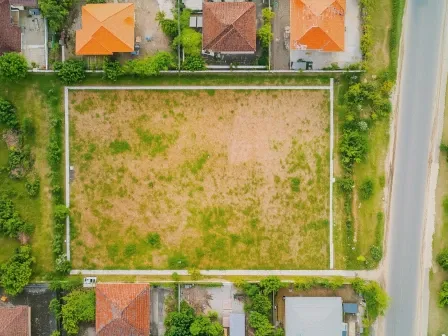
You might be wondering, “How do I get an address for my land?” if you don’t have a structure built yet.
Sometimes you need to know how to obtain a land address because you’re planning future construction or utilities, or you just need that official record. Getting an address for land follows similar processes to getting an address for new builds, but there are some slight differences.
- Contact your local municipality (a city or town with a local government office). From there, you can request an official address for your land, but you will likely be required to provide proof that you own the place with a deed, a plat map, and a planned use of the property.
- With your newly constructed address in hand, contact the local planning or zoning department. They assign addresses that comply with the address application rules and can indicate to the USPS that the address has been assigned to your land.
- If utilities are the goal, check the utility companies’ requirements, as they’ll need to confirm if an address is needed. (Sometimes, it’s not.)
- Remember to follow up with the USPS. Having an official address from the local government is great, but you’ll still want it registered as quickly as possible to accommodate emergency service crews, mail, and package delivery. You can call or visit your local post office and have them verify that the complete address was registered with USPS.
The time it takes for a new address to be recognized

So, how long does it take for a new address to be recognized?
Well, if you do absolutely nothing, it could take up to 6 months. This could understandably be longer than you’re willing to wait for the USPS database to accept your address.
Why does it take so long for a new address to be recognized?
There are several reasons the process of a new address being recognized in USPS’s database takes longer than we’d like.
First, humans are increasingly impatient thanks to living in a quick-fix, quick-search world where supercomputers live in our pockets. Let’s give the USPS workers a little grace.
Second, a new address must be verified by local authorities to be approved for inclusion in the USPS database. This helps ensure that the entered physical address is never incorrect. It's how the USPS can claim database accuracy.
The USPS also keeps their database standardized and clean, so the submitted location needs to follow standardized formatting rules to meet their system requirements, including address numbering that’s friendly for emergency services.
Think of the many new housing developments and complexes being built in just your city. (We can think of at least 20 apartment buildings in just our city). These all have different addresses, and they need to be verified simultaneously by the only office in the jurisdiction, which likely has 1-2 designated people for that job. New-build address validation takes time.
Third, a local verification process relies on other offices being available to provide the necessary documentation.
For example, USPS needs to create or modify existing mail service routes to include your address. The USPS updates its address database periodically, and not on demand. Humans also make mistakes, and miscommunication can add to the process timeline.
A final note on time
Sometimes, the USPS isn’t the only one to blame if your address isn't recognized on other sites and systems. Many organizations employ third-party vendors, similar to Smarty, who don’t update their addresses monthly.
Even if the USPS has updated your address, other 3rd-party providers might drag their feet and not update their databases to include yours until it feels right to them. That just adds to the time it takes for your new construction address to be recognized as a real address.
How organizations should handle USPS "new construction address not recognized."
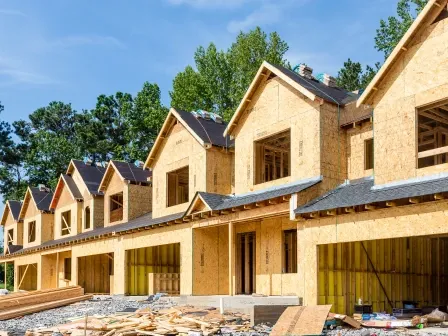
New construction address verification can already be frustrating for your customers. The last thing you want is to add to that frustration by rejecting a legitimate purchase simply because their new residential address hasn't yet been recognized by USPS.
What can your organization do about this?
Introducing address exception handling, the backup plan isn’t to ostracize the new kid on the block.
To be clear, we’re not telling you to do away with regular address validation services.
BUT without an address exception-handling process in place, you will lose sales. There are two different ways you can go about capturing all valid address sales, even if they’re new or not yet reported in the system: 1) manually and 2) automatically.
- A manual process could require the customer to provide additional information. Forms of identification, such as a government ID or a utility bill to verify the address, could suffice.
- An automated process can quickly approve proposed addresses while still tracking returns or failed transactions.
For businesses where every sale matters, particularly insurance providers, high-value retailers, and other transaction-sensitive industries, rejecting a legitimate address can mean losing valuable customers and revenue.
A hybrid approach to address exception handling combines automated address verification with manual review for addresses that can't be immediately validated. By flagging unverified addresses for additional review rather than automatically rejecting them, businesses can reduce lost sales while maintaining accurate customer data.
Smarty recommends incorporating address exception handling into your address verification process to accommodate legitimate new-construction addresses that USPS hasn't yet recognized.
Talk to a Smarty expert to explore your options, or sign up for a free trial to see how Smarty's address verification tools can support your business.
With the right approach to new construction address verification, you can reduce unnecessary transaction failures, improve the customer experience, and capture more legitimate sales.
USPS new construction address not recognized? Here's what to remember
If USPS doesn't recognize your new construction address, the good news is that there are steps you can take to resolve the issue. Start by confirming your address with local authorities, contacting your local post office, and following up with your builder or developer. Getting a new address registered with USPS can take time, but staying proactive can help move the process forward.
For businesses, a USPS "new construction address not recognized" response shouldn't automatically mean a lost customer. A newly built property can have a legitimate physical address even if it hasn't been added to the USPS database. Implementing an address exception handling process alongside your regular address verification tools can help prevent rejected orders, abandoned checkouts, and unnecessary customer frustration.
Smarty's US address verification tools help businesses validate, standardize, and better understand address data, while address exception handling enables accommodation of legitimate addresses that USPS can't yet verify.
Whether you're a homeowner trying to register a new address with USPS or a business working to improve address verification for new construction, the goal is the same: make sure a valid address doesn't get overlooked simply because the database hasn't caught up.
FAQ about USPS new construction, address not recognized
If USPS doesn't recognize your new construction address, it may not have been added to the USPS address database yet. Newly built homes and commercial properties must first receive an official address from their local government before that information is reported to USPS. Even after an address is assigned, additional verification and database updates may be necessary before it appears in USPS lookup tools.
You can check whether your new construction address is recognized using Smarty's free address verification tool. Enter your complete street address, city, state, and ZIP Code to check it against USPS address records and Smarty's additional address data. If your address isn't verified, it may not yet be included in the available databases. To know if USPS recognizes your address, simply review the metadata output to see if: 1) the address is marked as “valid”, and 2) enhanced_match is “postal-match.” This combination ensures that your data is valid as well as verified with the United States Postal Service.
Mail delivery to a new construction address may be delayed or unavailable until USPS recognizes the address and establishes delivery service. Even if your address is officially assigned by your local government, it may not yet be eligible for USPS mail delivery. However, other providers who rely on non-postal address data may still be able to deliver to your new address. Contact your local post office to confirm your property's delivery status.
Google Maps and USPS use different address databases and verification processes. Google Maps may recognize a newly built property's physical location before USPS recognizes it as a mailing address. Appearing on a map doesn't necessarily mean an address is eligible for mail delivery. Use Smarty's address verification tool to check its verification status against postal and additional address data.
Yes, in some cases. While USPS address verification relies on postal records, Smarty's US Address Verification API also uses proprietary address data that includes millions of non-USPS addresses. This means Smarty may recognize some legitimate addresses that USPS doesn't. However, newly constructed properties that haven't appeared in any available reference data may still require manual review or address exception handling.
Was this helpful?