


Predictive analytics in insurance are transforming P&C workflows
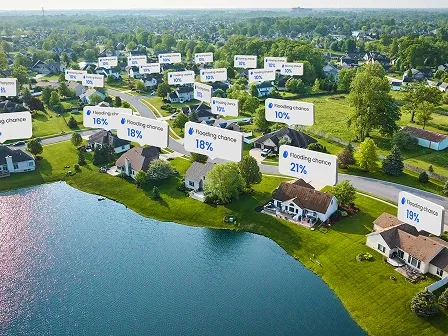
Predictive analytics in P&C insurance uses artificial intelligence, machine learning, and statistical modeling to analyze large volumes of internal and external data—including claims history, telematics, Internet of Things sensors, environmental sensors, weather, and behavioral data.
What’s changed isn’t just the availability of data—it’s the volatility insurers are being asked to price and manage. Climate-driven CAT losses, tighter reinsurance markets, regulatory pressure on pricing fairness, and rising customer churn have made traditional, backward-looking models increasingly insufficient for setting sustainable insurance premiums.
These predictive insights are meant to help insurers forecast risk, improve pricing accuracy, detect fraud earlier, streamline claims processing, strengthen claims management, and deliver more personalized customer experiences by forecasting outcomes and identifying likely repeat patterns.
Throughout underwriting, claims, fraud, and retention, predictive analytics depend less on algorithmic novelty and more on the quality, resolution, and continuity of the data feeding them.
Address quality is often viewed as backend hygiene, but it’s actually a strategic enabler for linking risk, claims, and customer history across the policy lifecycle.
Smarty’s US Rooftop Geocoding, US Property Data, and US Address Verification, all backed by a persistent, unique identifier, SmartyKey®, help you ensure that the data you’re putting into statistical modeling systems is pinpoint-accurate, deduplicated, and enriched with additional datapoints. You can try all of these products for free here, or continue reading to learn more about the shift in predictive analytics in insurance.
In this article, you’ll find information on how predictive analytics make better workflows possible. Each of these areas maps to a different part of the insurance organization—from underwriting and actuarial teams to claims operations, fraud, and customer experience—showing how insurance predictive modeling changes decisions across the full policy lifecycle:
- Enabling predictive pricing and more accurate risk selection
- Detecting insurance fraud and high-risk claims earlier with insurance predictive modeling
- Improving claims triage, prioritization, and settlement efficiency
- Identifying at-risk policyholders to reduce customer churn
- Enhancing customer experience through predictive personalization
- Better predictive analytics in P&C insurance for claims management
Enabling predictive pricing and more accurate risk selection
For underwriting and actuarial teams, predictive loss and severity models are a clear example of the use of predictive analytics in insurance, enabling more nuanced expected cost estimates for risk assessment than broad historical averages. They predict expected cost by learning how specific risk factors have historically influenced both how often losses occur (frequency) and how expensive they are when they do occur (severity) based on claims data.
They then apply those learned relationships to new risks across underwriting processes. Predictive modeling in insurance also has to be explainable and governed—especially in pricing—so high-quality, auditable features matter. Property and geospatial attributes tied to validated addresses are easier to document, monitor, and defend over time than opaque or proxy variables, making them more suitable for regulated pricing decisions.
In practice, that means two risks that look similar on paper can be priced very differently once the model accounts for subtle but material differences that historically drive loss outcomes—helping insurers set insurance premiums that better reflect true exposure rather than relying on coarse geographic averages.
Exact address data is the anchor that turns abstract risk signals into property-specific predictions instead of broad, area-level assumptions. As the Casualty Actuarial Society states, “The phrase 'garbage in, garbage out' has never been more relevant, and actuaries increasingly must understand and quantify the impact that the quality of the data has on their work.”
Smarty couldn’t agree more.
An exact, validated, standardized, and enriched address supports finer risk segmentation, more consistent underwriting decisions, and pricing that better reflects the true exposure—especially when paired with rooftop-accurate geocoding and building data such as square footage, construction type, and property use.
Detecting insurance fraud and high-risk claims earlier with insurance predictive modeling
The FBI estimates that P&C insurance fraud costs the U.S. over $40 billion per year. And fraud is not always a movie-plot crime ring. It’s everyday claim padding and misrepresentation, too. Deloitte says soft fraud accounts for 60% of all incidents because it’s harder to prove and therefore even harder to detect.

For SIU and fraud teams, the use of predictive analytics in insurance helps fight fraud by analyzing relationships among addresses, claimants, and incidents to uncover suspicious activity that traditional, reactive methods might miss.
With a reliable property-level identifier in place, predictive fraud models can move beyond single-claim analysis and evaluate patterns over time, across claimants, and by location.
- Source request links analysis: Insurers use address data to detect patterns where multiple claims originate from the same location or where relationships exist between seemingly unrelated claimants.
- Verification of existence and status: Address verification tools can flag high-risk addresses, such as Commercial Mail Receiving Agencies (CMRAs), PO Boxes, or vacant properties. Metadata from services like Smarty can also support occupancy analytics, helping insurers identify mismatches between declared use and actual property behavior—an important signal in both application fraud and claims investigation.
- Location mismatches: Geocoding allows insurers to verify if a claim's location aligns with the actual path of a weather event. For example, if a policyholder claims storm damage, precise geocoding can confirm if the property was actually within the storm's path or the specific burn zone of a wildfire.
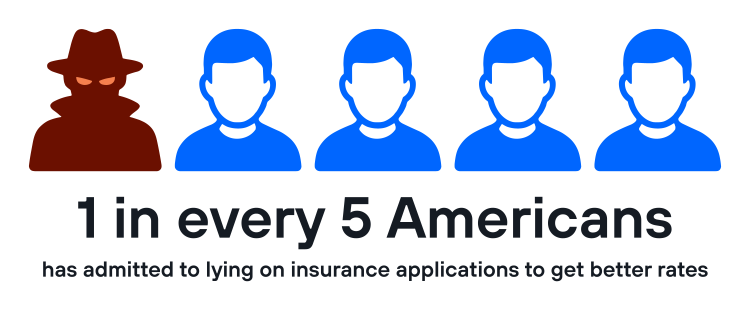
- Application fraud: Approximately 1 in every 5 Americans has admitted to lying on insurance applications to get better rates, often by misrepresenting location or occupancy to lower insurance premiums. Address verification APIs integrated into the quote process can prevent this by ensuring the provided address is valid and accurately reflects the risk zone.
At this stage, predictive modeling in insurance is less about “finding anomalies” and more about risk assessment and ranking risk—determining which claims, customers, or properties deserve attention first.
This proactive approach reduces leakage, discourages repeat abuse, and helps investigations focus on where they matter most rather than boiling the ocean.
Pinpoint-accurate address and location data helps predictive models catch fraud and high-risk claims earlier for two big reasons: it improves the signals you can model, and it improves the linkage between records so the model isn’t learning from (or acting on) messy, duplicated, mismatched data.
Improving claims triage, prioritization, and settlement efficiency
Claims organizations can use predictions from insurance predictive modeling to route work based on likely complexity and severity, extending the use of predictive analytics in insurance into day-to-day claims operations.”
Low-complexity claims (such as simple liability claims or minor fender benders) can move through claim processing faster, while claims predicted to involve higher costs, litigation risk, or special handling (such as CAT claims, large property losses, or multi-vehicle accidents) can be escalated earlier.
That typically reduces cycle time, improves adjuster utilization, and helps customers get resolutions sooner, improving customer satisfaction and claims management.
Once address data is standardized and tied to a persistent, unique identifier, predictive modeling in insurance can operate at the level actually insured: the individual structure, not an abstract location:
- It improves event validation and plausibility checks.
- Ex: Two claims both say “hail damaged the roof,” yet one property is inside the hail path, and the other is miles away. Precise geocoding enables a predictive model to fast-track likely legitimate minor claims and simultaneously escalate fraudulent-looking ones for review.
- It strengthens record linkage and deduplication.
- Ex: One property shows three water claims over an 18-month period, but the claims are separated into different address formats: one with “ST.,” another with “street,” and another with “Str.” With standardization, the model treats all three claims as linked and can flag “repeat-loss property” earlier, routing the claimant to a specialist.
- It adds high-signal features that correlate with severity.
Ex: Multiple properties are affected by a wildfire. One of those properties is a mixed-use building. It’s a claim tied to commercial real estate at the edge of a residential area that has a much larger footprint and much higher rebuild complexity and cost. It’s also a place where people make a living and won’t be able to collect a paycheck or return to work until it’s rebuilt. Accurate address data, combined with building data insights, such as square footage, elevation, use case, and more, can help the predictive analytics model escalate more complex cases immediately.

Identifying at-risk policyholders to reduce customer churn
For growth, marketing, and customer experience teams, predictive analytics in P&C insurance uses address data both as a signal and as a join key, which is what allows retention efforts to be targeted instead of broad, highlighting exactly which customers need attention, and why, before renewal decisions are made:
- Address data improves the quality of the retention predictive model itself.
Retention models learn from historical outcomes—who renewed, who lapsed, and under what conditions. If addresses aren’t standardized, the same household or property can appear as multiple records across policy, claims, billing, and CRM systems.
That fragments claims history, service interactions, and prior retention outcomes, which weakens churn predictions. Clean, normalized addresses linked to a persistent property or household identifier enable models to learn from complete, accurate histories rather than partial ones.
- Exact address data introduces location-based risk and experience signals
Predictive modeling in insurance can factor in exposure to recent weather events, repeat-loss properties, or neighborhood-level risk changes that may drive premium increases or dissatisfaction.
For example, a policyholder whose property sits squarely in a recent hail or wildfire footprint—even if they didn’t file a claim—may be more likely to shop after seeing insurance premiums rise due to location-based risk adjustments. Rooftop-accurate location data lets models distinguish those customers from others in the same ZIP Code who weren’t actually exposed.
- Address data helps models understand claims friction and churn potential
Claims tied to properties with complex characteristics—large footprints, multi-unit structures, mixed-use buildings, or hard-to-access locations—often take longer to resolve.
Longer claim cycle times, repeated inspections, and unclear timelines introduce friction that customers rarely forget, especially when a claim is their most direct interaction with the carrier.
Predictive analytics helps identify which claims are likely to become complex early, enabling faster routing to experienced adjusters and proactive communication.
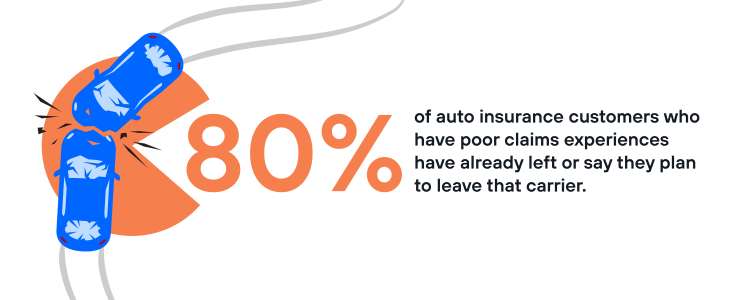
The retention impact of this friction is well documented. According to J.D. Power, “80% of auto insurance customers who have poor claims experiences have already left or say they plan to leave that carrier,” underscoring how tightly claims efficiency and customer loyalty are linked.
Predictive analytics in property and casualty insurance signals ultimately converge into renewal risk scores and driver explanations that retention teams can act on without defaulting to broad discounting strategies that erode insurance premiums across the book.
Now, insurers can tailor property data-informed interventions: proactive education for customers whose premiums increased due to location-based risk, concierge service for customers with high-friction claims, or targeted offers to improve customer engagement for customers whose engagement has dropped after a move or life event.
Address data often detects those life events first—policyholders who move, consolidate households, or change occupancy patterns show address changes before other systems catch up, making predictive analytics even more intuitive.
- Accurate address data improves timing and channel effectiveness
Retention outreach fails when communications arrive late, go to the wrong place, or feel irrelevant.
Verified, up-to-date addresses help ensure renewal notices, physical mail, inspections, and local service referrals reach the customer when they matter most, and the first time you send them.
Enhancing customer experience through predictive personalization
From a customer experience perspective, predictive personalization is less about customized messaging and more about reducing unnecessary effort.
Personalized insurance approaches can be what sets your organization apart from the rest. Predictive analytics in insurance helps you see a customer’s needs and meet them before they have to ask or escalate the problem themselves, shifting the landscape from “resolving complaints” to “preventing frustration.”
At a high level, predictive modeling in insurance considers signals such as prior claims experience, service interactions, billing behavior, engagement patterns, coverage changes, location-based risk, and customer behavior. They use this information to estimate things such as preferred communication channels (including social media), likelihood of filing a claim, sensitivity to price changes, or frustration risk during a claim.
Zoomed in, predictive personalization also shows up in timing and relevance. Predictive models can forecast when customers are most likely to need guidance—before renewal, after a major weather event near their property, or following a claim closure that historically increases churn risk.
Instead of sending blanket emails, insurers can proactively explain coverage or insurance premium changes in context—why they happened, what risk factors changed, and what options the customer has—making interactions feel helpful rather than reactive.
Because address and property data persist across policy, claims, and service interactions, they provide continuity that customers expect but rarely articulate—eliminating the need to re-explain their property, risk, or situation at every touchpoint.
For example, after a particularly aggressive weather event, “Here’s what this storm means for homes like yours,” rather than the generic, “Severe weather may impact your area,” can add the personalization your customer craves.
It also helps your sales teams avoid tone-deaf moments—like offering irrelevant coverage or advice that doesn’t apply to the customer’s actual property or location—which can make your organization (or at least the staff) seem inexperienced rather than misinformed (though both can be bad).
When you employ predictive analytics in property and casualty insurance (powered by hyper-accurate, enriched address data) in your P&C insurance, you create a full, 360-degree view of your customers, which is great for KYC compliance, personalization, and streamlining your processes.
Better predictive analytics in P&C insurance for claims management
Here’s our hot take: Better data beats better models.
For insurance companies evaluating where predictive analytics delivers real ROI, the answer is increasingly clear: AI-powered insights only deliver value when they’re fed accurate, explainable, and well-linked big data that can be operationalized across underwriting, claims, and servicing workflows within insurance companies.
Streamlining data management and predictive modeling in insurance is no longer theoretical—it’s achievable when insurers can standardize inputs, connect records across systems, and trust the data feeding their models for data analytics.
With that foundation in place, insurers can embed predictive insights directly into decisions rather than letting them sit in dashboards—especially when real-time data can be operationalized across complex property lines like commercial real estate, where risk, claims, and customer experience intersect.
And once those real-time data insights are operationalized, insurers aren’t just reacting faster—they’re better positioned to spot emerging risks, shifting trends, and new growth opportunities early, then translate those signals into smarter, personalized decisions while there’s still time to act.
Highly accurate, enriched address data makes predictive analytics more reliable across P&C workflows—sharpening underwriting and pricing, improving claims triage and settlement speed, flagging fraud earlier, strengthening claims management, and identifying churn risk before renewal.
Predictive analytics in insurance also streamlines operations by reducing manual review and enabling more consistent automation, while strengthening data integration by linking internal and third-party signals into a clearer 360-degree view of each customer and property.
By combining historical policy and claims data with customer interactions and external inputs like weather, telematics, geospatial, and economic signals that are tied to pinpoint accurate address data, machine learning models then uncover patterns and produce actionable outputs.
Those risk scores, severity forecasts, fraud flags, and next-best actions are the type of risk assessment insights that teams can use in real time to price smarter, handle claims faster, personalize service, and make better decisions.
Was this helpful?