
Property deed search by address
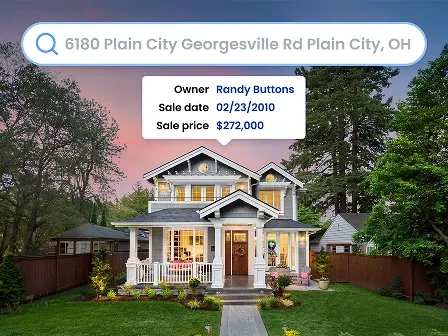


A property deed search by address is a lookup that uses a property's street address to find official ownership records—typically stored by county recorders or assessors.
When someone uses an address to find a property deed, they’re typically looking for information regarding current owners, past transfers, liens, and other legal details associated with the property. Many counties or third-party providers offer online search portals that allow users to enter an address and retrieve deed information; typically, these tools charge a fee and take 7-10 minutes per record.
A property deed search by address typically involves:
- Locating the correct county recorder or assessor website
- Entering the fully standardized property address
- Agreeing to multiple terms and services
- Waiting for the report to generate
- Confirming the location via a geocoded pin on a map
- Paying a fee
- Downloading the report
Smarty provides you with all this information and more, without the hassle and waiting. Feel free to check out our property data and enrichment tools for $0.00. Go ahead and test them out below. Or, if you just want to learn more about property deed searching by address, keep reading!
Here’s this cute, lil table of contents, and you can click around and read the topics that are interesting to you:
- What is a property deed search by address?
- How property deed searches work
- Where to find property ownership information online
- How to standardize an address before performing a deed search
- How to find census tract and geospatial identifiers for a property
- When to use professional property data tools
- Conclusion: You can, but should you?
- Property deed search by address FAQs
What is a property deed search by address?
When someone uses an address to search for a property deed (and all the information that deeds carry about a property), that’s a property deed search by address. They’re using the address to search for additional information surrounding the land parcel where that address is located.
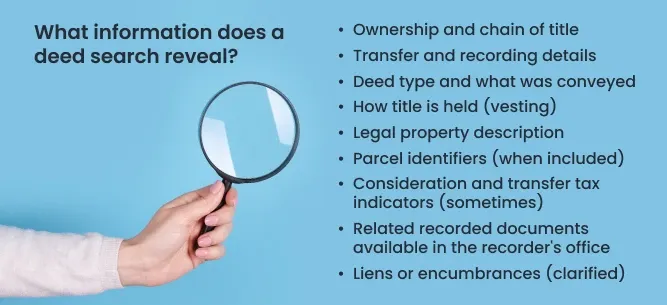
What information does a deed search reveal?
Typically, users performing a property deed search by address are looking for specific details:
- Ownership and chain of title
Grantor(s) and grantee(s) on each transfer, plus the sequence of recorded ownership changes over time (to the extent the county’s online history goes back).
- Transfer and recording details
Recording date/time, document/instrument number (and sometimes book/page), execution date, document type, and links to scanned images when available.
- Deed type and what was conveyed
Warranty deed, special warranty, quitclaim, grant deed, trustee’s deed, etc., and whether the transfer appears to be arms-length, intra-family, estate-related, foreclosure-related, or a partial-interest transfer (as stated in the document).
- How title is held (vesting)
Ownership/vesting language, such as individual vs entity, trust/LLC, and (where stated) forms like joint tenancy, tenants in common, community property, etc. (varies by state and how the deed is drafted).
- Legal property description
Subdivision lot/block, metes-and-bounds, condo unit description, and references to plats/maps that precisely define what the property is.
- Parcel identifiers (when included)
APN/PIN/parcel number references may appear, but they’re not guaranteed on every deed. Even when present, the legal description is the authoritative identifier.
- Consideration and transfer tax indicators (sometimes)
Some deeds state a price; many use nominal language (“$10 and other valuable consideration”). In some jurisdictions, documentary transfer tax/stamp information may be present and can hint at value, but it’s not universally available or clean.
- Related recorded documents available in the recorder’s office
Depending on what’s been recorded and indexed, a deed search often surfaces other public recordings tied to the property or owner, such as:
- Deeds of trust/mortgages and assignments
- Lien filings (mechanic’s, judgment, tax) and releases/satisfactions
- Easements and right-of-way documents
- HOA declarations/CC&Rs (often referenced, sometimes recorded separately)
- Plats, parcel maps, surveys, boundary line adjustments
- Probate/estate-related instruments and trustee documents
- Liens or encumbrances (clarified)
A deed itself may state “subject to” easements/CC&Rs, but most liens and many encumbrances appear as separate recorded documents. A “deed search” on a county recorder portal often includes these because you’re really searching the recorder’s records, not just one deed.
Difference between a deed search and a title search
Deeds and titles are two different things. So let’s clarify the difference to understand why the search intent is also somewhat different.
Deeds: These usually tell you who transferred ownership to whom (grantor and grantee), when it was recorded, the document/instrument number, the deed type (warranty, quitclaim, trustee’s deed, etc.), and the legal description of the property.
Titles: These are more comprehensive and often show the current title holder and whether that title can be transferred without unresolved problems (marketable). That usually requires further investigations.
A deed search finds recorded ownership transfer documents (and sometimes related recordings). In contrast, a title search assesses the entire state of title, confirming the current owner and identifying any unresolved encumbrances, defects, and restrictions that affect marketability.
The difference between a deed search and a title search boils down to intent.
Deed searches are typically performed by:
- Homeowners and buyers (early research stage)
- Real estate agents
- Investors/wholesalers
- Attorneys/paralegals
- Property tax/assessor staff
- Journalists/researchers
- Neighbors/snoops
Essentially, a deed search involves retrieving documents and reviewing ownership/transfer history from recorded land records.
Title searches are performed by:
- Title companies/title agents
- Mortgage lenders
- Homebuyers (during escrow or closing)
- Real estate attorneys
- Land developers
- Commercial buyers/investors
- HELOC/refinancing borrowers
- Courts/bankruptcy/probate contexts
Essentially, a title search is used for risk verification—to determine who owns it now and what legal claims/restrictions could affect use or transfer.
How property deed searches work
Getting all the information associated with a property deed search by address is simple with Smarty’s tools. First, sign up for a 42-day free trial of US Property Data to unlock your full insight potential, then follow the step-by-step instructions below.
Step-by-step deed lookup process
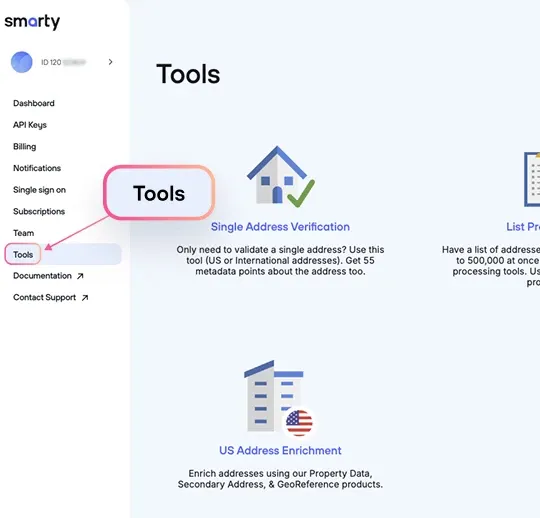
- Log in to your Smarty Dashboard.
- In your left-hand side panel, click “Tools.”
- Once there, if you’ve signed up for your 42-day free trial of US Property Data, you can click on “US Address Enrichment.”
4. In freeform mode, enter the address in question (we’re using 77 Massachusetts Ave, Cambridge, MA 02139), and click “SUBMIT.”
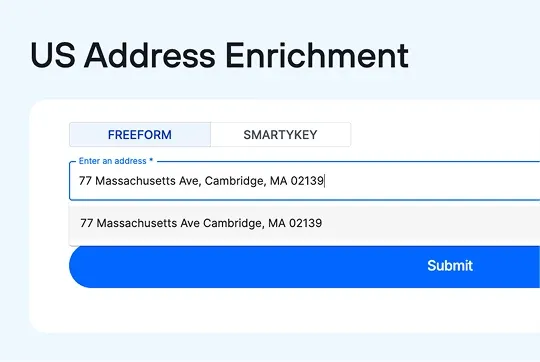
5. Next, not only will you see amazing results that would be found in any deed search performed by address, but you’ll also see up to 350 other helpful details surrounding a property (when available), such as security alarm status, number of buildings on the parcel, geocoordinates (latitude and longitude), elevation, number of fireplaces, FIPS Codes, census tract data, and so much more. You can view the full list of attribute options now if you wanna get even more excited about partnering with Smarty for your deed-searching needs.
Why counties maintain deed records
Counties maintain deed records because land ownership is one of those things society really prefers not to “wing.” Recorded deeds create an official, public paper trail that supports three big needs:
Chain of title
Deed records establish a public history of ownership transfers—who conveyed property to whom, when, and under what legal description. We say “convey” because sometimes property ownership shifts without a sale. Other “convey” scenarios might include gifting a property to another person, an executor fulfilling an estate or trust, or a divorce settlement in which one spouse conveys their portion to the other.
This chain of title ownership helps buyers, lenders, courts, and title professionals confirm who has the right to convey the property today and, hopefully, spot breaks, competing claims, or missing links before they become problematic.
Taxation
County governments rely on recorded ownership and property identification to ensure the accuracy of the property tax system. Deed records support:
- Updating owner information (so tax bills and notices go to the right person)
- Connecting the legal description/parcel identity to the tax roll (so the county can assess and bill the right property)
- Providing documentation when assessed ownership or mailing responsibility is disputed (so billing and enforcement actions are directed to the correct party)
Boundary disputes and property definition
Deeds preserve the legal description (and references to plats, surveys, easements, and rights-of-way) that define the property. When neighbors disagree about where a line is—or when access, utility rights, or shared driveways get fuzzy—recorded land records provide the official language courts and surveyors use to resolve disputes (or at least argue about them with better citations).
Why standardized addresses matter
Standardized addresses matter in a property deed search by address because the recorder’s office usually isn’t “address-first.”
Most deed systems are indexed by owner names and property location/legal description, and the “street address” (if present at all) can be inconsistent or missing.
When someone types an address into a deed search tool, the tool must match that input exactly to the correct property record. Most county records systems don’t use fuzzy matching, so an exact input is necessary to match the standardized dataset it’s pulling from. Standardization is what makes that match dependable.
However, new addresses can sometimes cause the property deed search tool to fail. Even though the build is official and the deed is signed, government agencies aren’t really known for their speed when it comes to updating records.
New construction exposes the weakness of address-based deed searches: if an address hasn’t been propagated across postal and county-aligned datasets yet, standardization is what enables your tool to reliably map what a user typed to the correct parcel/legal description—and therefore the correct deed.
Where to find property ownership information online
There are two common ways to look up property ownership online:
- Go straight to the official county sites (most accurate, often clunky)
- Use a third-party public records portal (faster, but you’ll pay for convenience, and you’ll still need to verify the information provided)
Using county recorder search portals
County recorder (or clerk/registrar) portals are where you find recorded documents: deeds, mortgages/deeds of trust, releases, liens, plats, easements, and other filings. Many systems are built around the reality that recorded documents are indexed by party names and document identifiers, not always by a clean, reliable street address, but if addresses are the only information you have, you may want to lean on Smarty to gather this information rather than a property deed search by address through a county recorder search portal.
Our US Property Data product provides up to 350+ points of data surrounding a submitted address, such as:
- Assessed value of the land
- Last updated date from the assessor
- The latest sale’s document page number for the deed
- Disabled tax exemptions that may be attached to the deed
- Mortgage term, type, rate, etc.
- And so… much… more…
Common lookup interfaces you’ll see
Address search
This is the “type an address, get documents” experience that many people hope for (one we’ve already touched on). When it’s available, it often requires selecting a recognized address from a dropdown (because free-typing creates too many mismatches).
The problem with this style is that address searches only work as well as the county’s address index is cleaned, updated, and maintained. If the address you’re attempting to search for deed information on is new, inconsistently formatted, or not yet in the index, you may receive zero results or a deed linked to the incorrect parcel.
Parcel search (APN/PIN/Serial Number)
This is usually more reliable than an address-based search because it’s how the county internally identifies land, so the search function will only pull up the specific parcel you’re referencing. (Just be careful not to fat-finger the numbers as you type them into the search, or it’ll bring up an entirely different parcel.)
We’ll use a local example to illustrate our point.
Utah County’s land records portal supports Serial Number (parcel) searches and also exposes property/tax links once you’re on the right parcel record.
You can use this type of property deed search when you already have the parcel ID from an assessor/tax site, a listing, or a prior document.
Name search (grantor/grantee)
This is the recorder’s “classic mode” search type. Many systems allow you to search by grantor/grantee (seller/buyer) because that’s how documents are typically indexed.
This property deed search type is primarily useful when an address search fails, when the property is located in a rural or newly developed area, or when you’re tracking an owner entity (such as a trust/LLC).
This property deed search type can be more challenging to navigate, though, as many individuals share the same first and last names as others, even within the same county. If you’re unsure of a general area where the parcel should be located, only relying on the name might prove to be more complicated and time-consuming than you bargained for.
Instrument/document number search
If you have the document/instrument number (the unique ID assigned by the county recorder to a land record), this is the most precise way to retrieve a specific record. Many land record systems explicitly support Instrument Number Search (and related searches, such as volume/date).
If you’re chasing one specific deed, lien, or release and you want to avoid ambiguity, using an instrument or document number search (provided you already have that information) is DEFINITELY the way to go.
What you’ll typically get from a recorder portal
- Deed images/PDFs (when available)
- Recording details (document number, recorded date, book/page)
- People (grantor/grantee)
- Legal description references and related recordings
It’s also worth noting that many recorder portals explicitly warn that the info can be delayed or incomplete, and that a title search may be needed to verify its accuracy.
Examples of public search portals
These sites are built for speed and usability. They often let you search by address, then show a “property profile” that blends together:
- ownership + mailing address
- recent transfers
- tax/assessor-style characteristics (sq ft, year built, etc.)
- document images (when available)
A few examples to consider are listed below.
HomeInfoMax (pay-per-item pricing)
HomeInfoMax markets nationwide access, but the cost structure is “subscription + per-report/per-document.” Their plan pages list per-item pricing for items such as document images and different report types (including “Legal & Vesting” and “Title History”).
When you don’t want to bounce between county sites, and you’re okay with paying per document/report, this type of pay-per-item pricing and manual, one-at-a-time processes might be a good way to go about property deed searching.
PropertyScout.io (bundled monthly searches + document downloads)
PropertyScout offers tiered plans that include a set number of property searches and a limited number of “Enhanced Document” downloads (examples include deed images, mortgage images, and a preliminary title offering).
If you need to make frequent property deed lookups, where bundled volume pricing beats paying à la carte, this option might fit the bill.
State-focused “property record” portals (aggregated “all-in-one” framing)
Some state-focused portals (see one of Utah’s) explicitly describe property records as being spread across multiple offices and attempt to provide a unified experience for owner information, deeds, permits, liens, etc.
This type is less stringent and might require more analysis and verification on your end, but it works well if you don’t care which office has it/just want answers.
The tradeoffs of using a public search portal for deed info
Sure, a public deed searching portal offers a faster user experience, fewer portals to navigate, and sometimes even a better address search. However, the costs can add up, coverage definitely varies by county, and the search is only as accurate as the underlying public sources that it’s pulling from and the matching logic those tools employ.
If you’re looking for a source that aggregates the data from every county, standardizes it, verifies it, and enriches it with even more property details, give Smarty a try. We’ll provide a 42-day free trial, including 1000 property deed searches by address lookups, at no cost to you.
One more “official” category people confuse with deeds: assessor/tax portals
If your real goal is to decipher “who owns this” (not “show me the deed”), assessor/tax sites are often the quickest place to confirm owner name + parcel ID, then jump into recorder records with that parcel/instrument info.
How to standardize an address before performing a deed search

If you’re using Smarty’s tools, like our Address Enrichment API, you don’t have to worry about this step at all! We’ll just do the standardizing, validating, deduplicating, and more behind the scenes faster than you can say, “go do the thing.”
BUT
If you aren’t using Smarty’s standardized data and intuitive tools, a correctly formatted address is one of the only ways you can guarantee that the deed you search for is the one the address-based deed search will provide.
Standardized formatting helps public record systems without fuzzy matching or intuitive search functionality to pull the right data.
It also helps you avoid failed searches caused by address variations and user errors, such as misspellings, unrecognized abbreviations, and unregistered addresses or lots.
For example, Kukun found success with Smarty because their whole business depends on answering a deceptively hard question: “Is this address in this county deed the same place as this address in an assessor record, a building permit, or an MLS listing?”
Kukun’s data sources (including county deeds/assessor records across 3,000+ counties) came in wildly different formats, with missing pieces and typos—so even when a homeowner typed in a real (sometimes brand-new) address, Kukun couldn’t reliably match it to the correct underlying property record.
Using Smarty US Address Verification, they standardized and normalized addresses at a massive scale (100M+; later 112M+), which let them blend datasets using the address field as the universal key and dramatically improve match confidence—raising address resolution on building addresses from 65% to 95%.
How to find census tract and geospatial identifiers for a property
While it might look like we’ve totally shifted gears here (weren’t we just talking about property deed searches by address lookups?), we promise the topics are related. Stick with us. We’re getting to the good stuff.
Most people find census tracts and geospatial IDs for a property while they are performing a deed search. There are a couple of ways to do this outside of property deed searches, though, and they’re either 1) starting with an address and asking a geocoder what geography it falls into, or 2) starting with longitude and latitude coordinates and performing a “reverse lookup” to basically map them to track/block IDs.
For most, the process of finding census tracts and geospatial identifiers for a property can be done with different tools, plus a lot of extra elbow grease and time:
- Use the U.S. Census Geocoder (web format or API): Enter an address, receive geography tied to the location. Caveat: results are derived from the Census Bureau’s MAF/TIGER address ranges, which can include “possible” address numbers (places where structures or mailable delivery points don’t actually exist).
- Use the FFIEC Geocoding/Mapping System: This tool, commonly utilized by banking and compliance departments, returns the MSA/MD (metropolitan statistical area geography) to obtain the data combinations required for KYC (Know Your Customer) and AML (Anti-Money Laundering) reporting.
- Use the FCC’s Area/Census Block APIs: If you already have lat/long coordinates, you can call the FCC geocoding APIs to get things like the Census Block and other related data points surrounding a location.
- Or the best option, enterprise GIS joins: Third-party providers will geocode addresses to coordinates, then spatially join those points to census boundary polygons (tract/block shapefiles) for you! You’ll pay a little more, but the convenience and compliance-ready standardization and validation this method brings will basically pay for itself in time saved and errors side-stepped.
Census tract lookup by address
A census tract lookup by address is the process of taking a street address and converting it into a precise, geocoded location to return the census tract that contains that location. Different industries need this information for various reasons:
Fintech and banking: Use tract lookups to support compliance-style geography needs, fair lending monitoring, and tract-based portfolio segmentation for risk and performance analytics.
Healthcare/Health insurance/Healthtech: Utilize a census tract lookup by address to incorporate neighborhood context for network planning, outreach, and population health analytics, particularly when measuring access and outcomes consistently across service areas. Additionally, ensure your organization provides equitable access to the community for reporting services via census tract lookups.
Telecommunications: Utilize tract lookups to prioritize buildouts, model demand, and report coverage using stable geographic boundaries that don’t shift, such as those based on stable ZIP Codes.
Shipping/Logistics/Transportation: Utilize tract lookups to enhance delivery points for market and service-area analysis, enabling teams to compare demand and performance across consistent neighborhood geographies (beyond ZIP-level rollups).
Education/Schools: Use tract lookups to understand student/community demographics and plan services, boundaries, and resource allocation using standardized, comparable geographies.
Property and casualty insurance: Use tract lookups to segment underwriting risk and portfolio exposure with neighborhood-scale precision, improving analysis for pricing, claims patterns, and hazard context.
Federal government: Use tract lookups to tie constituents and program participation to official census geographies for reporting, funding justification, and equity analysis.
Retail/Ecommerce: Use tract lookups to improve trade-area planning, site selection, and market sizing by connecting customer or store addresses to consistent demographic/geographic units.
Census tract vs ZIP Code
Commonly confused, census tracts and ZIP Codes are not the same thing.
Census tracts are small, stable geographic areas created by the US Census Bureau to support consistent statistical analysis over time.
However, ZIP Codes are created by the United States Postal Service (USPS) for mail delivery efficiency and routing.
A ZIP Code can also change over time as rural land is converted to metropolitan areas or experiences dramatic growth. As such, ZIP Codes are less stable forms of geographic clustering.
Unlike ZIP Codes, tracts are designed for data accuracy and comparability, not mail delivery. That’s why people search phrases like “census tract lookup,” “find census tract by address,” and “census tract maps” when they need reliable demographic, lending, or neighborhood context tied to a specific property.
Census tract numbering and how tracts are assigned
Assigned by the US Census Bureau (and often some local input), census tracts are numbered to create manageable, consistent statistical units that can be tracked over time and analyzed for trends. The numbering structure used helps quickly and confidently identify tracts within a county, even as populations grow and areas change.
Tracts are designed to remain stable from year to year and are considered geographic identifiers. And, while it’s designed by the US Census Bureau, the tract numbers are unique within a county (not nationally organized). There are 2 similarities to how they function, though:
- Tract numbers are unique and numeric, often including decimals.
- They’re designed for continuity. (They don’t encode demographics, but are just used as an identifier/label to track data over time.)
When to use professional property data tools
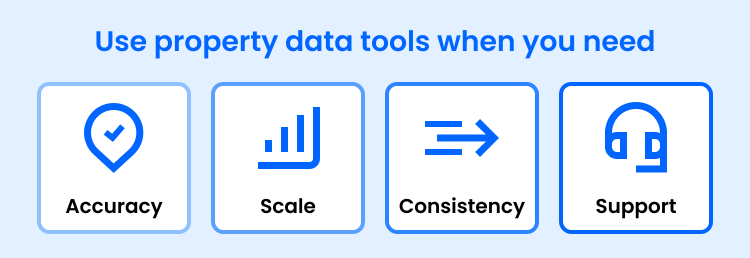
Use professional tools when any or all of these statements are true:
- You need accuracy you can defend and depend upon (compliance, lending, underwriting, analytics, business or organization expansion)
- You need scale (bulk lookups, pipelines, or app integration)
- You need consistency across messy real-world inputs (typos, abbreviations, unit formats, new addresses)
- You need support from industry experts who have studied and spent years refining their approach to address data and census tracts/property deed searches by address.
Or, whenever you need accurate and fully fleshed out information on a property to perform more accurate risk analysis, support geographic requirements and reporting, need demographic profiles to segment markets and understand buyer/renter populations, or when you’re looking for appraisal context.
APIs that deliver consistent property intelligence
Smarty’s products deliver behind-the-scenes excellence that seamlessly performs property deed searches by address, standardizes data, facilitates census block and tract lookups, and more. We fill in the gaps and issues with user experience that crop up in county lookups by providing ways to perform bulk address research, streamline your underwriting processes, and automate workflows.
- US Property Data API - This product page includes sample data demos. US Property data is built to provide fuller insight into every location. Try it free live, or sign up for a 42-day free trial to see important property details like roof type, structure elevation, ownership history, and more.
- US Census Block and Tract Data - Find information like US census block and tract IDs, SmartyKey®, accuracy level, and more! This product page also includes demos and data, and it’s free to try and simple to use for finding a property’s legal description, lender information, mailing FIPS Codes, and more.
- US Address Enrichment API - Are you more of a developer who’s looking for property data insights commonly found in a deed? Here’s our live sandbox for you to test the full capabilities of our API. Look at sample data responses and gain insight into how the API works in a test environment.
When county lookups aren't enough
County lookups are great for one-time answers to “who owns this” questions, but they begin to seriously break down when you are doing bulk research or anything that needs consistent, defensible decisions. Consider workflows dealing with underwriting, risk assessment, or due diligence.
Public county portals vary widely in search interfaces, indexing quality, data updates, document scanning, and more, and scaling means someone has to manually stitch together those disparate datasets and try to make sense of the whole mess (without introducing duplicate or inaccurate information).
This is too big a task for even one address expert to tackle. Even if you could pull the documents necessary and find a way to standardize and transfer it all into a digestible format for your workflows, counties typically don’t hand you the normalized, analysis-ready outputs that you need (like standardized addresses, reliable geocodes, census IDs, consistent owner/entity fields, confidence scoring, etc.), which is the information needed for automating decisions, audit outcomes, and comparing properties head-to-head on even ground.
That’s why Smarty has a whole team working on address issues. One individual or team of developers shouldn’t feel pressured to also be address data experts. Let Smarty do the heavy lifting for you.
Conclusion: You can, but should you?
A property deed search by address is supposed to be simple: type an address, pull the deed, confirm ownership, and move on with your day.
In reality, county records aren’t built around street addresses, and small input differences or brand-new addresses can derail the search—returning the wrong parcel, missing the newest filings, or forcing you into varying portals, terms, paywalls, and 7–10 minutes of your precious time.
The common thread through every successful deed lookup is accuracy at the front door: a clean, standardized address that reliably maps to the correct parcel and legal description. From there, deed searches do what they’re meant to do, surfacing the recorded documents that describe ownership transfers, recording details, and any related filings that might affect the property.
However, when your work involves bulk research, underwriting, risk assessment, or due diligence across many locations, county-by-county searches are slow, inconsistent, hard to audit, and nearly impossible to scale without introducing additional and unnecessary risk.
That’s why teams use Smarty. Instead of performing one-off lookups, you can standardize and enrich addresses automatically, return census tract and geospatial identifiers, and pull consistent property intelligence.
We’re accurate, easy to implement and integrate, and accessible and responsive if you have questions or concerns. Smarty’s tools and services are fast, built for big or small projects, and backed by real humans (tech support and developers) who are available when edge cases show up.
Try Smarty free
- Enrich a single address with property intelligence: Try US Property Data to see 350+ attributes for a location, including deed-related fields and additional property context.
- Get census tract and geospatial IDs in a clean response: Try US Census Block and Tract Data to return tract/block identifiers and other geospatial reference fields.
- Integrate it into your workflow: Try the US Address Enrichment API Tool to standardize input addresses and return enrichment fields programmatically.
Sign up for a free Smarty trial to enrich property addresses, retrieve census tract data, or integrate property intelligence into your workflows. Forget the waiting, the portal-hopping, or other unwanted surprises that crop up when you can’t trust the data you’re looking at.
Property deed search by address FAQs
How to look up the owner of a property?
If you only need to find the owner of one property, start by signing up for a free trial of Smarty’s US Property Data product. This will give you 1000 address lookups on us!
US Property Data is plugged into every county assessor’s database in the USA, and it’s the fastest and most standardized place to see the current owner-of-record, as well as some other useful datapoints. The information you are looking for will be in the tool’s returned output, labeled “deed-owner-full-name”. Simply type in the address you need information on, then view the results!
Or, if you know the county where the address is located, you can go to the county assessor/tax portal, get the current owner-of-record and parcel ID, then use the parcel ID to pull the most recent deed in the county recorder portal. Some portals also support searching by parcel number or grantor/grantee name.
How can I find property ownership details?
“Ownership details” usually mean two things: who owns it now and how ownership has changed over time. We recommend using a third-party address enrichment service, such as Smarty, which specializes in address data. But, for smaller jobs, you can also use county recorder records to view deeds and transfer history by going to the local county assessor/tax portal.
Can I do a property search myself?
Yes! Smarty’s tools can be used by anyone (simple, accurate, straightforward), and most counties provide the public with access to portals for recorder and assessor, and taxation data. Just be careful to verify that you’ve matched the right parcel/legal description with the address you’ve provided, especially when working with condos, multi-unit buildings, and new construction builds.
Can anybody do a title search on a property?
Anyone can technically look up recorded documents, but a full title search is usually only done by title professionals or attorneys because it requires experience interpreting the finer details and an eye for spotting what’s missing, if anything. We recommend that you find a professional rather than DIY’ing something with higher stakes like a property title.
What is the difference between a title search and a deed search?
A title search checks whether a title is clear/marketable, or whether there are encumbrances or defects, such as liens or easements.
A deed search is just finding the recorded documents used to perform a title search.
Was this helpful?